
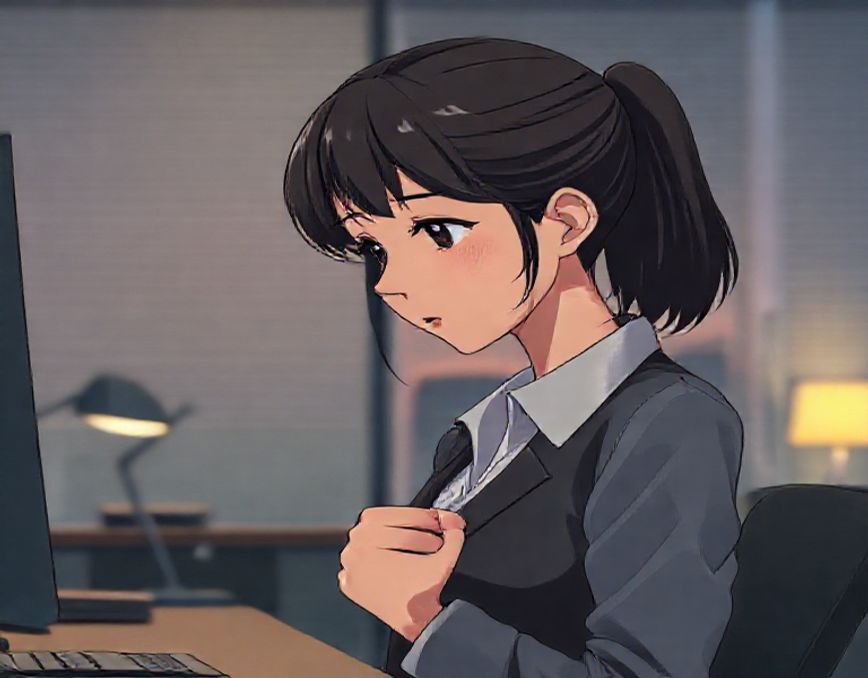
The Art of 'Crying Yourself to Sleep': Decoding「泣き寝入り」When You Must Swallow Injustice.
The Art of 'Crying Yourself to Sleep': Decoding「泣き寝入り」When You Must Swallow Injustice.
Hello to all my fellow warriors who have lived and battled in Japan for over a decade!
I'm sure you've experienced this feeling: you buy a slightly expensive item, only to find a defect when you get home. You plan to exchange it the next day, but then you imagine the hassle of explaining, filling out forms, and maybe even getting a suspicious look from the staff... So you sigh and think, "Oh, whatever." 😩
Or at work, your boss makes an unreasonable request. You know it's wrong, but you can't push back for fear of jeopardizing your position. You can only stay silent and comply, feeling a knot of resentment in your stomach.
For moments like these, the Japanese have a powerful word that perfectly encapsulates all those feelings of helplessness and resignation: 泣き寝入り (なきねいり - nakineiri).
This isn't a word you'll easily find in your Minna no Nihongo textbook, but it's an indispensable part of real life here.
🤔 What is 「泣き寝入り」?
Let's break down the characters:
- 泣き (naki): Crying
- 寝入り (neiri): Falling asleep
➡️ Literal meaning: To cry oneself to sleep.
The literal meaning itself is already full of tragedy and helplessness, isn't it? And that's the very soul of this word.
「泣き寝入り」 describes the act of reluctantly accepting or enduring an unfair, disadvantageous, or unsatisfactory situation because there is no way to fight back, or because fighting back seems like it would cause even more trouble.
It's not simply "giving up" (諦める - akirameru). It's "giving up from a position of weakness," it's "swallowing a bitter pill," it's the feeling of being wronged with no recourse.
scenarios Real-Life Scenarios with 「泣き寝入り」
To get a better feel for it, let's see how Japanese people use it in everyday situations:
-
🛍️ Shopping & Services:
「ネットで買った服、写真と全然違ったけど、返品も面倒だから泣き寝入りするしかないか…」 (The clothes I bought online look completely different from the photo, but returning them is a hassle, so I guess I have no choice but to accept it...)
-
💼 In the Workplace:
「先輩のミスを押し付けられたけど、ここで反論したら面倒なことになる。今回は泣き寝入りだ。」 (My senior blamed me for their mistake, but if I argue here, it'll turn into a huge mess. I'll just have to take the fall this time.)
-
🚗 Minor Accidents:
「駐車場で少し車をこすられたけど、相手がすごく怖そうな人だったから、泣き寝入りしてしまった。」 (Someone scraped my car a little in the parking lot, but the other person looked really intimidating, so I just let it go.)
-
💸 Money Issues, Petty Scams:
「少額の詐欺だから警察に言うのも大げさだし、結局泣き寝入りする人が多いらしい。」 (Apparently, since it's a small-time scam, reporting it to the police feels like an overreaction, so many people end up just accepting the loss.)
🆚 Quick Comparison: 「泣き寝入り」 vs. 「諦める」
This is the key to using this word like a pro. Both mean to give up, but their nuances are worlds apart.
| Feature | 泣き寝入り (Nakineiri) | 諦める (Akirameru) |
|---|---|---|
| Nature | Forced to give up | Actively choosing to give up |
| Emotion | Injustice, resentment, anger, helplessness 😡 | Neutral, sometimes positive (giving up a bad habit) 🤔 |
| Reason | Weak position, fear of trouble, lack of proof | Realizing a lack of ability or suitability |
| Example | Losing money to a scam and accepting it | Giving up learning the piano after realizing you have no talent for it |
In other words, when you 諦める, you are the decision-maker. When you 泣き寝入り, you are a victim of circumstances.
💡 Why is 「泣き寝入り」 so prevalent in Japan?
This word deeply reflects several aspects of Japanese culture:
- Conflict Avoidance: Japanese culture tends to avoid direct confrontation to maintain harmony (和 - wa). Complaining or suing is often seen as a disruptive act.
- Dread of Hassle (面倒くさい): Sometimes, the energy and time required to fight for justice are more exhausting than simply accepting the loss. The philosophy of "it's better to suffer a small loss than to invite a big headache" is common.
- A Sense of Individual Powerlessness: When facing large corporations or a complex system with rigid rules, many people feel that they are too small to make a difference.
✨ Conclusion: The Weapon of the Powerless
「泣き寝入り」 is not just a vocabulary word; it's a concept, a sigh of resignation that you will hear and feel often in Japanese society.
It expresses a harsh reality: sometimes, staying silent and accepting the situation is the most "prudent" choice, even if you are screaming inside from the injustice.
Next time you encounter an annoying situation but decide to let it slide, try muttering to yourself: 「まあ、今回は泣き寝入りするか…」. You'll find you've just touched upon a very 'Japanese' layer of emotion. 😉
Thẻ liên quan:
Lan tỏa kiến thức
Chia sẻ những điều hay ho với bạn bè