
Decoding 「腰が低い」: The Art of 'Staying Low' to Gain High Influence
Decoding 「腰が低い」: The Art of 'Staying Low' to Gain High Influence 🙇♂️
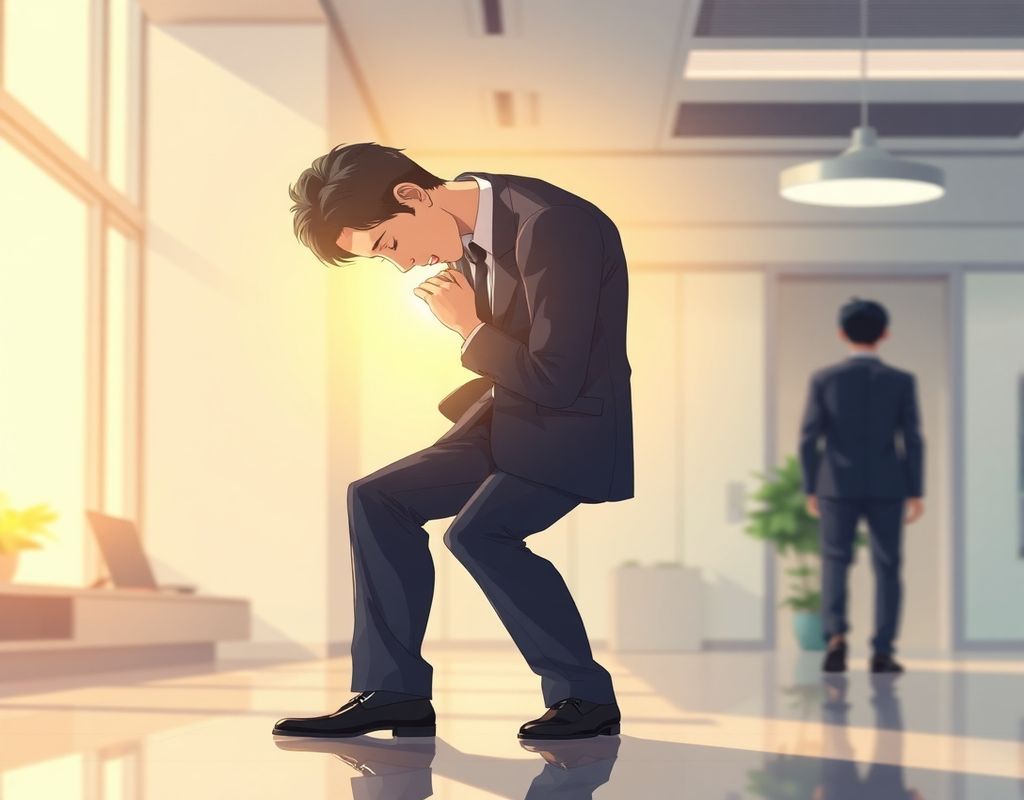
If you've lived in Japan long enough, you've likely encountered this type of person: A high-ranking CEO of a major corporation, a master of tea ceremony, or a highly influential senior (senpai) who is incredibly gentle, soft-spoken, and always bows lower than everyone else. The Japanese describe such people as 「腰が低い」 (Koshi ga hikui) – which literally translates to having a "low waist" or "low center of gravity."
Why, in a hierarchy-conscious society like Japan, is "lowering oneself" considered a form of soft power? Let’s break down this art of living to see how practical Japanese differs from what you find in textbooks! 💡
1. 「腰が低い」 is NOT about weakness or low self-esteem 🙅♂️
In Western cultures, or even in modern fast-paced societies, being overly humble can sometimes be mistaken for a lack of confidence or being a pushover. However, in Japan, 「腰が低い」 is a high-level compliment.
It describes someone who has status, talent, and achievements but actively chooses a humble attitude, avoids boasting, and treats others with respect regardless of their position.
💡 Practical Tip: Calling a very young person or a complete novice 「腰が低い」 can sound a bit odd. This term is usually reserved for those who already have an established standing but remain remarkably down-to-earth.
2. Why does a "Low Center of Gravity" help you go further? 🚀
In Japan, arrogance is "poison" for any relationship. When you carry yourself with a 「腰が低い」 attitude, you are sending a powerful signal:
- Breaking down defensive barriers: Others feel safe and unthreatened by your ego. This makes them more likely to open up and share honest information.
- Building natural respect: Japanese people are highly sensitive to the "all bark and no bite" type. Someone who is clearly capable but remains humble makes others think: "This person is truly substantial" (what they call Kakkoyoi – cool in a sophisticated way).
- Attracting support effortlessly: When you don't place yourself above others, people are more willing to support you during tough times without feeling like they are being bossed around.
3. How to recognize and practice 「腰が低い」 like a local 🏯
Achieving this state isn't just about bowing low. It’s about your language and mindset:
Use Honorifics (Keigo) naturally, without overdoing it 🗣️
A person who is 「腰が低い」 doesn't use Keigo to create distance, but to soften the interaction. Instead of making blunt assertions, they often use "cushion words" like:
- 「恐縮ですが...」 (I am terribly sorry, but...)
- 「お差し支えなければ...」 (If it is not an inconvenience...)
Listen more than you speak 👂
At drinking parties (Nomikai) or meetings, the "low-waisted" person is usually the one asking questions and listening intently to subordinates or partners, rather than monopolizing the conversation with personal tales of glory.
Accept feedback with grace 💧
When corrected, instead of making excuses, they often say: 「勉強不足でした。ご指導ください。」 (I was lacking in study. Please guide me). This attitude makes it almost impossible for the other person to stay angry, and the issue gets resolved smoothly.
4. Distinguishing it from 「卑屈」 (Hikutsu - Being servile) ⚠️
There is a fine line here that many expats struggle with.
- 腰が低い: You are confident in your own value but respect the value of others.
- 卑屈 (Hikutsu): You grovel or belittle yourself out of fear or a blind desire to please. The Japanese are very perceptive; they will immediately sense whether your humility is genuine or a performance.
Conclusion 🌸
Living in Japan for over 10 years, the biggest lesson I've learned is: The higher you climb, the lower your center of gravity should be. Cunningly bowing low at the right time doesn't make you smaller; on the contrary, it makes your presence feel larger and more trustworthy than ever in the eyes of the Japanese.
Next time you meet a partner or a superior, try adopting the 「腰が低い」 spirit. You might be surprised at how doors of opportunity that seemed bolted shut suddenly swing wide open just because of a properly humble attitude!
Have you ever met a truly 「腰が低い」 person? Share your experiences below! 👇
Thẻ liên quan:
Lan tỏa kiến thức
Chia sẻ những điều hay ho với bạn bè