
Decoding 「慇懃無礼」: When Extreme Politeness Becomes a Weapon
Decoding 「慇懃無礼」: When Extreme Politeness Becomes a Weapon
If you have lived in Japan long enough, you have likely experienced this sensation: A shop assistant, a business partner, or even a neighbor speaks to you using flawless, textbook-perfect honorifics (Keigo). They bow at the perfect angle and use the most formal vocabulary. Yet, deep down, you feel a chill, a subtle sense of disdain, or a steel wall erected right in front of you.
Welcome to the world of 「慇懃無礼」(Ingin Burei)—one of the most sophisticated and frustrating communication states a foreigner can encounter in the Land of the Rising Sun. 🧊
1. What does 「慇懃無礼」 mean?
To understand this term, let’s break down the Kanji:
- 慇懃 (Ingin): Means extremely polite, courteous, and attentive.
- 無礼 (Burei): Means rude, impolite, or disrespectful.
Put together, Ingin Burei describes a paradoxical state: Being so polite that it becomes rude.
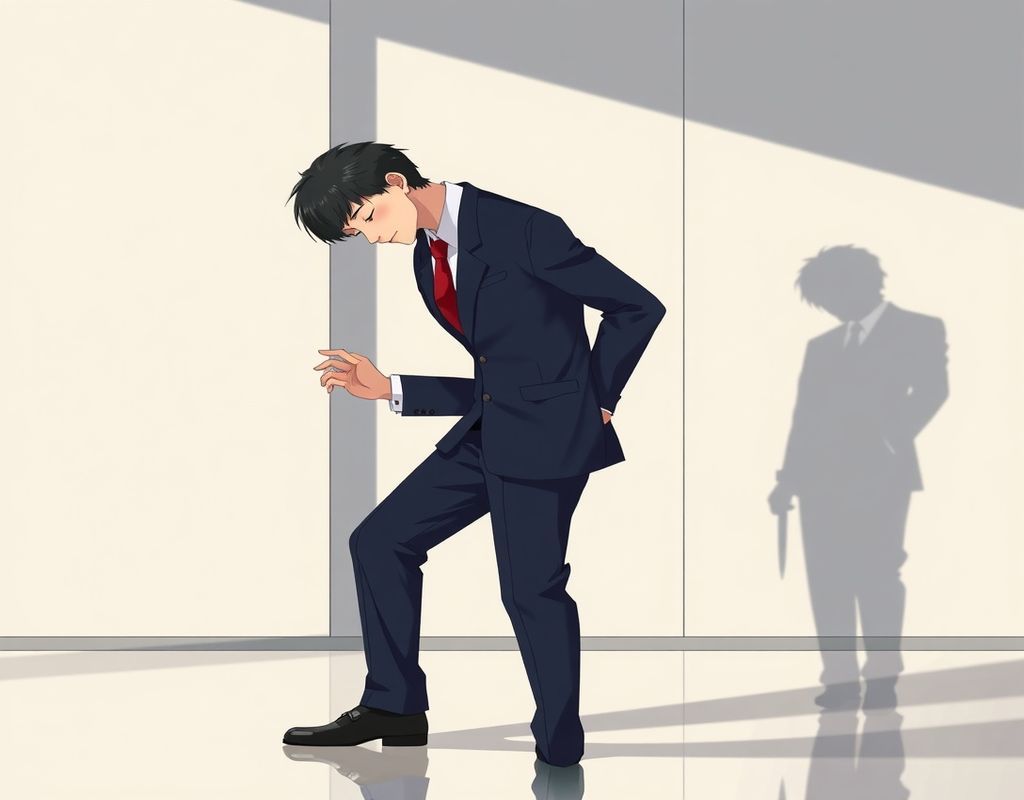
This isn't a grammatical error. On the contrary, practitioners of Ingin Burei are often masters of language. They use excessive politeness as a shield to hide arrogance or as a weapon to create an insurmountable distance from the other person. In the psychology of Japanese communication, this is considered a form of "linguistic violence" wrapped in silk. 🎀🔪
2. Why do Japanese people use 「慇懃無礼」?
In a society where harmony (Wa) and etiquette are paramount, losing one's temper or hurling direct insults is considered low-class behavior. Instead, when someone wishes to express dissatisfaction, contempt, or simply wants to sever a relationship, they tend to ramp up the politeness to an unnecessary degree.
When someone suddenly switches to extremely formal Keigo with someone they were previously casual with, it is a signal of "social distancing." They are subtly saying: "You and I are not on the same level," or "I want nothing more to do with you; please stay on the other side of this honorific wall."
3. Typical Manifestations of 「慇懃無礼」
You can identify someone who is being "politely rude" through the following signs:
- Over-politeness: Using formal language reserved for the Emperor or religious ceremonies in a mundane context. This makes the conversation feel theatrical and insincere.
- Monotone, Cold Tone: The words are beautiful, but the voice lacks warmth and empathy.
- Indifferent Gaze: They might bow very low, but their eyes do not meet yours, or they look through you with coldness.
- Mechanical Compliance: Using Keigo to refuse help or requests heartlessly, without any flexibility, such as: "We deeply apologize, but according to our regulations, this is absolutely impossible. We trust you understand." (When in reality, a tiny bit of flexibility would solve the problem).
4. Real-life Examples from Experience
In the Workplace: You suggest a new idea during a meeting. A senior colleague who dislikes you, instead of countering directly, says: 「〇〇-sama's gokōken (lofty opinion) is a precious treasure that a person of my humble stature struggles to fully comprehend. However, perhaps due to my limited intellect, I fail to see its practical application here.」 (Roughly: Your opinion is so brilliant I can't even understand it. But since I'm so dumb, I think it's useless.) => This is a classic attack—belittling you by putting you on a pedestal so high it’s ridiculous. 🙄
In Customer Service: You enter a high-end restaurant wearing somewhat rugged clothes. The server greets you with long strings of honorifics but with an extremely distant attitude, slow service, and a stern expression. They are using politeness to make you feel unwelcome in a way that is impossible to complain about.
5. How to Handle "Polite Rudeness"
When you realize you are the target of Ingin Burei, stay calm. Do not try to break the wall by becoming overly casual, as that only gives them more reason to look down on you.
- Maintain Professional Distance: Respond with corresponding but sufficient politeness. Don't try to "win them over."
- Focus on Content, Ignore Nuance: If they use honorifics to be sarcastic, treat it as a genuine compliment and continue the conversation straightforwardly. When you are unaffected by the sarcasm, their weapon loses its power.
- Observe and Learn: Ingin Burei is a valuable lesson in reading emotional subtext. It helps you understand that in Japan, sometimes language is used not to communicate, but to establish boundaries.
Conclusion
Japanese is not just about vocabulary or grammar; it is a game of psychology and social standing. Understanding 「慇懃無礼」 gives you deeper insight into the complexities of the Japanese character. Do not be deceived by a polite exterior; learn to listen to what is not being said.
True politeness must be accompanied by sincerity (Magokoro). If there is only the shell of Keigo without human warmth, it is merely a sophisticated form of rudeness.
Stay sharp and refined on your journey to mastering real-world Japanese! 🌸
Thẻ liên quan:
Lan tỏa kiến thức
Chia sẻ những điều hay ho với bạn bè