
Demystifying 「ぶっちゃけ」: The Ultimate 'To Be Real' Phrase to Break Social Barriers
Demystifying 「ぶっちゃけ」: The Ultimate 'To Be Real' Phrase to Break Social Barriers ⚡
If you've lived in Japan long enough, you're likely familiar with Tatemae (建前) culture—those polite, roundabout phrases that can make you feel like you're navigating an endless fog of social graces. Want to know what your colleague really thinks of the new project? Want to know if that Japanese friend actually wants to hang out, or if they're just being polite?
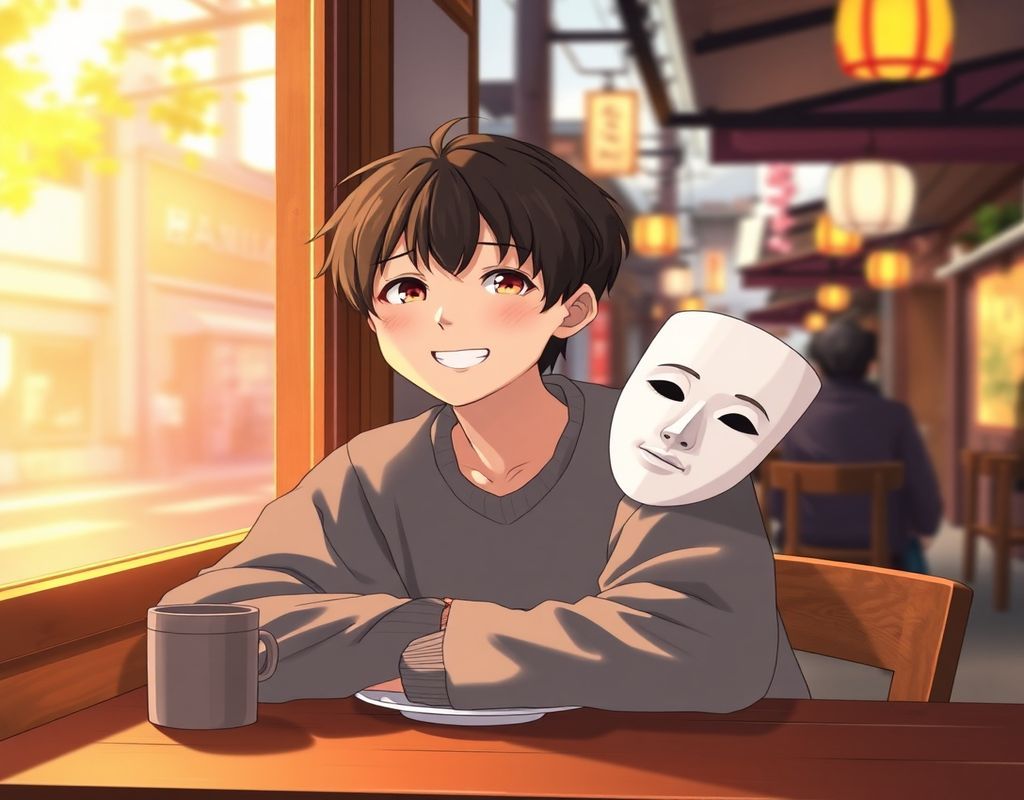
Welcome to the world of 「ぶっちゃけ」(Butchake). This isn't just a slang term; it's a psychological "switch" that helps you and your counterpart drop the social mask and face each other with absolute sincerity. 🎭
1. The Origin of 「ぶっちゃけ」: Casting Off the Burden
The term 「ぶっちゃけ」 is a colloquial variation of the verb 「打ち明ける」(Uchi-akeru), which means to confide, disclose, or pour out one's heart. Imagine carrying a heavy bag on your shoulders and deciding to dump everything out onto the ground. That is the spirit of 「ぶっちゃけ」.
In practical Japanese, it functions as an adverb to preface a sentence that is a "confession" or a "straight talk." It's equivalent to "To be honest," "Frankly speaking," or "To be real with you." 🗣️
2. Why is 「ぶっちゃけ」 So Powerful?
In Japan, speaking your mind (Honne) can be perceived as rude if there is no psychological preparation. 「ぶっちゃけ」 serves as both a subtle apology and an invitation.
- The Apology: "I'm about to say something a bit blunt or too honest, please don't be offended."
- The Invitation: "I'm being real with you now; please be real with me too."
When you use 「ぶっちゃけ」, the atmosphere usually shifts. The other person tends to focus more because they know that what follows isn't just typical social fluff. 🤐
3. How does it differ from 「正直」(Shoujiki)?
Textbooks often teach you to use 「正直 (しょうじき)」 when talking about honesty. However, there is a subtle boundary between them:
- 正直: Carries a serious, objective nuance, often used when reporting facts or admitting a mistake. (e.g., "To be honest, I forgot to submit the report.")
- ぶっちゃけ: More personal, casual, and slightly "rebellious." It contains the speaker's private emotions and opinions. It creates an "in-group feeling" and intimacy that 「正直」 simply cannot achieve. 🤝
4. Practical Applications (Real-life Scenarios) 💡
Let’s see how Japanese language pros use this phrase:
💼 At Work (After hours or with close colleagues)
You're having a beer with a coworker after a failed project. Instead of saying "We need to improve," you say:
「ぶっちゃけ、今回のプロジェクト là do sếp chỉ đạo sai đúng không?」 (To be real, this project failed because the boss gave the wrong directions, right?)
❤️ In Relationships
You're worried about your relationship dynamics:
「ぶっちゃけ、私の cứ gọi điện liên tục như vậy anh có thấy phiền không?」 (Honestly, does me calling you all the time like this actually bother you?)
🛒 While Shopping or Reviewing
When asking a friend's opinion on an outfit that looks a bit... strange:
「これ、ぶっちゃけ似合ってないよね?」 (Let's be real, this doesn't suit me at all, does it?)
5. Critical Warnings When Using 「ぶっちゃけ」 ⚠️
Despite its usefulness, 「ぶっちゃけ」 is a double-edged sword. Since it is inherently slang, you must strictly follow these rules:
- Do not use it with superiors or elders: Unless your boss is extremely casual and you are in a state of "opening your stomachs" (Hara wo waru). Using this with someone who deserves formal respect will make you look very uneducated.
- Don't overuse it: If every sentence starts with 「ぶっちゃけ」, people will suspect that you're lying the rest of the time! Only use it when you truly want to emphasize a point or change the mood.
- Listen to the response: Once you have "Butchake-d," be ready to receive a harsh truth in return. You've opened the door, so you must accept what walks through it. 🚪
Conclusion
Japanese is not just about grammar and vocabulary; it's the art of managing the distance between people. Mastering 「ぶっちゃけ」 proves you are no longer just a foreigner "parroting" a textbook, but someone who truly understands the soul of Japanese communication: knowing when to wear the mask, and knowing exactly when to take it off to be human with one another.
Next time you feel a conversation is becoming too dry or distant, try gently dropping a: 「ぶっちゃけ…」, and watch the magic happen! ✨
I hope this tip makes your life in Japan more interesting and "real." See you in the next tip! 🇯🇵
Thẻ liên quan:
Lan tỏa kiến thức
Chia sẻ những điều hay ho với bạn bè