
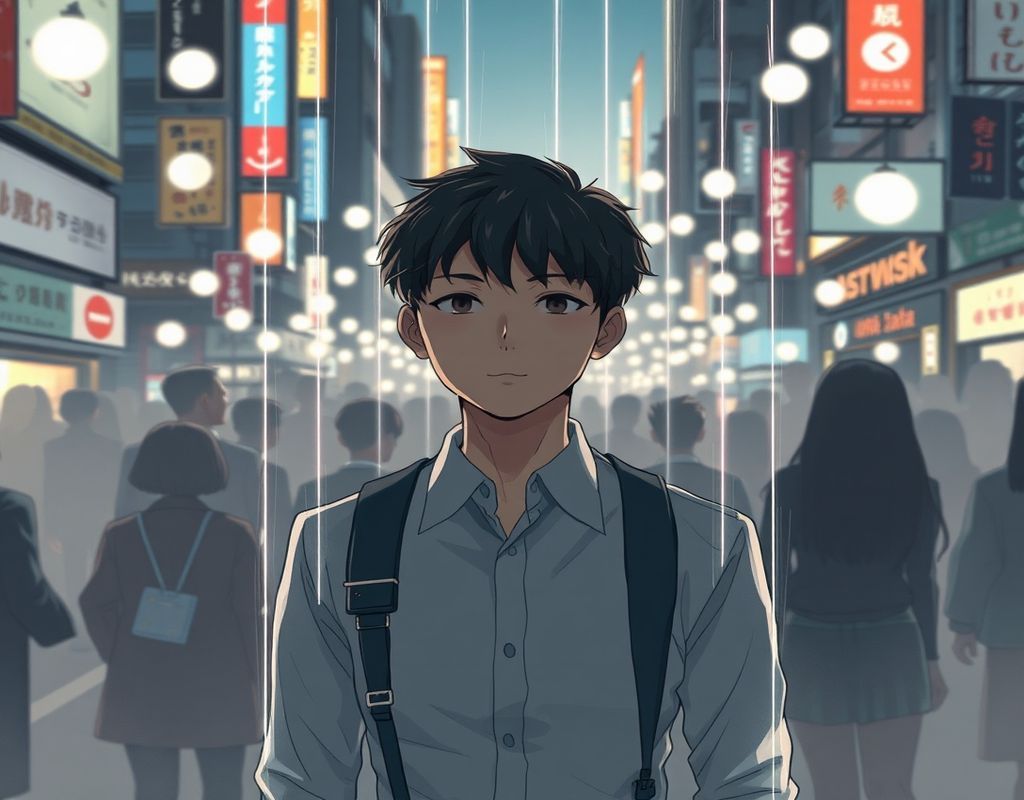
Decoding 「世間体」 (Sekentei): The Invisible Cage Governing Life in Japan
Decoding 「世間体」(Sekentei): The Invisible Cage Governing Life in Japan
If you have lived in Japan long enough, you will realize there is an invisible "force" following you from the moment you step out of your door until you go to sleep. It’s not the law, nor is it a specific company regulation, yet it possesses a coercive power stronger than any written document. Japanese people call it 世間体 (Sekentei) – often translated as "social appearance," "public face," or "the eyes of the world."
But if you only understand it as "reputation," you are only seeing the tip of the iceberg. For locals, Sekentei is an operating system running in the background of their minds, deciding what they wear, what they say, and even who they marry. 🎭
1. What exactly is 「世間体」?
Breaking down the Kanji, 世間 (Seken) means "the world/society," and 体 (Tei) means "form/appearance." Combined, Sekentei is how you appear in the eyes of those around you.
Unlike the concept of "self-esteem," which comes from within, Sekentei is entirely based on external evaluation. It is the answer to the constant question: “What will people think if I do this?”. In a collectivist society like Japan, being seen as "out of line" or "bringing shame to one's family/organization" is a severe psychological punishment.
2. The Tentacles of Sekentei in Daily Life 🐙
You will see Sekentei manifest in situations that Japanese textbooks never mention:
- Garbage Disposal: You sort your trash meticulously not just because you are 100% eco-friendly, but because you fear the neighbor might look at your trash bag and judge: "That household doesn't know how to live properly." That is Sekentei pressure in the neighborhood.
- Overtime Work: Why do many Japanese employees stay late even after finishing their tasks? They fear that if they leave exactly on time, colleagues will think they lack responsibility. They are protecting the Sekentei of a diligent worker.
- Marriage and Career: Turning 30 without being married, or quitting a stable corporate job to become a freelancer... these are all actions that "damage Sekentei." Parents often feel embarrassed before neighbors or relatives if their children do not follow the standard societal roadmap.
3. Why are Japanese People so "Obsessed" with Sekentei?
Its roots lie in the "Mura-hachibu" (village ostracism) culture of the Edo period. In the past, if you went against common rules, the entire village would cut ties with you. In an interdependent agricultural society, ostracism was a death sentence. ☠️
Today, while people are no longer kicked out of villages, the fear of being "isolated from the community" remains in the subconscious. Sekentei helps Japanese society maintain an incredible level of order, cleanliness, and safety, but the price paid is the suppression of individual freedom.
4. How to Use the Word 「世間体」 Like a Native
To speak natural Japanese, you need to know how to weave this term into the right context to express hesitation or social pressure:
- 世間体を気にする (Sekentei wo ki ni suru): To care about what the world thinks.
- Example: 「I really want to quit my job, but I'm 世間体を気にして and haven't dared to yet.」
- 世間体が悪い (Sekentei ga warui): Bad for one's image, scandalous, or improper.
- Example: 「Drinking heavily during the day is 世間体が悪い (looks bad to the public).」
- 世間体のために (Sekentei no tame ni): For the sake of appearances.
- Example: 「Getting married 世間体のために (just for the sake of appearances).」
5. Survival Tips for Expats in Japan 💡
As a foreigner, you have the "privilege" of not being expected to follow Sekentei 100% like a Japanese person. However, if you want to climb the career ladder or have strong bonds with your neighbors, understanding and "playing along" with Sekentei is essential.
- Don't overstrain yourself: You can never satisfy everyone. Pick the most important Sekentei rules (e.g., community etiquette, office manners) to follow, and keep your identity for the rest.
- Use Sekentei as a shield: When you want to decline an offer politely, you can use the excuse: "If I do this, it would be bad for the company's/family's Sekentei." Japanese people will immediately understand and sympathize with you.
Conclusion: Sekentei is not necessarily evil. It is the social glue that keeps Japan running smoothly. But understanding it so that you aren't swallowed by it is the mark of a true Japan veteran. Don't let the "eyes of strangers" become the cage for your soul! 🍀
Thẻ liên quan:
Lan tỏa kiến thức
Chia sẻ những điều hay ho với bạn bè