
Decoding 「大目に見る」: The Strategic Art of Turning a Blind Eye in Japan
Decoding 「大目に見る」: The Strategic Art of Turning a Blind Eye in Japan 👁️✨
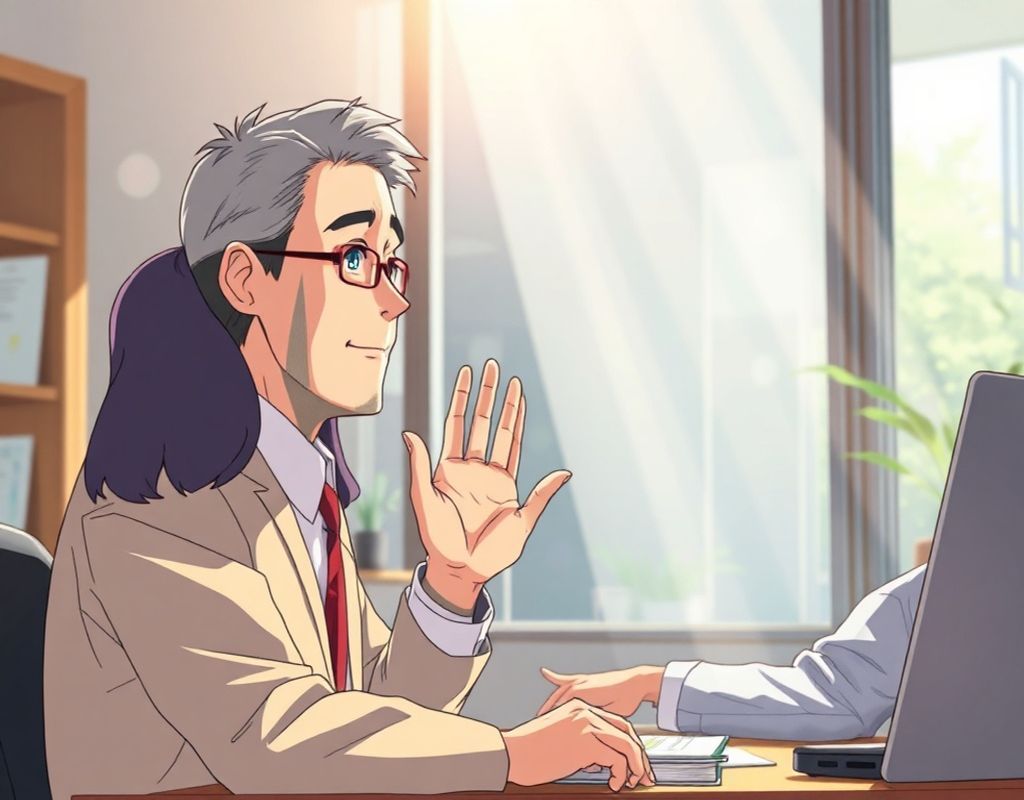
If you've lived in Japan long enough, you've likely experienced a heart-stopping moment: messing up a critical process, submitting a report late, or accidentally saying something inappropriate in front of a client. But instead of a long lecture or a formal warning, your boss or the other party simply says: 「今回は大目に見るよ」(I'll overlook it this time).
Congratulations, you’ve just experienced one of the most subtle mechanisms in Japanese behavioral psychology: 大目に見る (Oome ni miru).
1. What does 「大目に見る」 mean? 🤔
Literally translated from its Kanji, this phrase means "To look with big eyes." Imagine that instead of squinting to scrutinize every tiny flaw like using a microscope, the other person opens their eyes wide, taking in the whole picture and intentionally ignoring the small grains of sand at their feet.
In practical Japanese, it doesn't just mean "to forgive" (許す - yurusu). Forgiveness implies erasing the fault. 「大目に見る」 means knowing full well that something is wrong, but proactively choosing not to take action. It is a form of intentional leniency.
2. Why do Japanese people "turn a blind eye"? 🎭
In a society as disciplined as Japan, why does this concept exist? The answer lies in two words: The Big Picture.
- Saving Face (Mentsu): If someone is pursued to the bitter end for a mistake, they lose face (Kao wo tsubusu). Once face is destroyed, the relationship is often permanently damaged. Japanese people would rather overlook an issue to keep the social bond intact.
- Maintaining Harmony (Wa): Public reprimands can create a cold atmosphere (Kuuki ga tsumetai). By using 「大目に見る」, a superior or a peer provides an honorable exit for the person who made the mistake.
- Long-term Investment: This is a way of creating a "debt of gratitude" (On). When you are spared for a significant error, you are likely to work harder and be more loyal to repay that kindness.
3. Practical Usage: Don't mistake it for being easy-going! ⚠️
Remember that 「大目に見る」 is typically used by someone in a higher position towards someone in a lower position, or by the party holding the upper hand in a negotiation.
-
In the Office: When you make a mistake, but the boss sees you've worked your hardest.
- Boss: 「本来なら始末書ものだけど, 今回は大目に見るから, 次からは気をつけてね。」
- (Normally, this would require a formal apology letter, but I'll overlook it this time. Be careful from now on.)
-
In Service/Hospitality: When you accidentally violate a minor rule at a restaurant or hotel.
- Staff: 「今回だけは特別に大目に見ます。」
- (Just for this time, we will overlook it for you.)
4. How to react when someone shows you leniency? 🙇♂️
This is the most crucial part of proving you are "culturally fluent." Don't just laugh it off and say "Lucky me!".
Japanese leniency always comes with an unspoken expectation. When someone says they will overlook it, you must respond with deep remorse (Hanshou). The most professional response is:
「ご配慮いただき、誠にありがとうございます。今後は二度とこのようなことがないよう, 肝に銘じます。」 (Thank you very much for your consideration. I will take this to heart and ensure it never happens again.)
By acknowledging the "debt" you've incurred, you restore their face.
5. An Insider's Perspective after 10+ Years 💡
Having lived here for over a decade, I’ve realized that 「大目に見る」 is the lubricant that keeps the Japanese social machine from grinding to a halt. If everyone followed every rule strictly, everything would shatter.
However, there is an unspoken rule: There is a first time, but rarely a second. If you repeat the same mistake after being granted 「大目に見る」, the punishment will be twice as severe. At that point, you haven't just made a technical error; you've betrayed the trust and leniency of the other person.
Conclusion ✨
Knowing when to scrutinize and when to 「大目に見る」 is a sign of maturity and cultural depth in Japan. If you are in a leadership position, learn to use your "big eyes" to win people's hearts. If you are a subordinate, treasure the times you are spared, because it isn't just luck—it’s a second chance to prove your worth.
Master this subtle art, and your life in the Land of the Rising Sun will be much smoother! 🌸
Tag: cultural etiquette, conversation
Thẻ liên quan:
Lan tỏa kiến thức
Chia sẻ những điều hay ho với bạn bè