
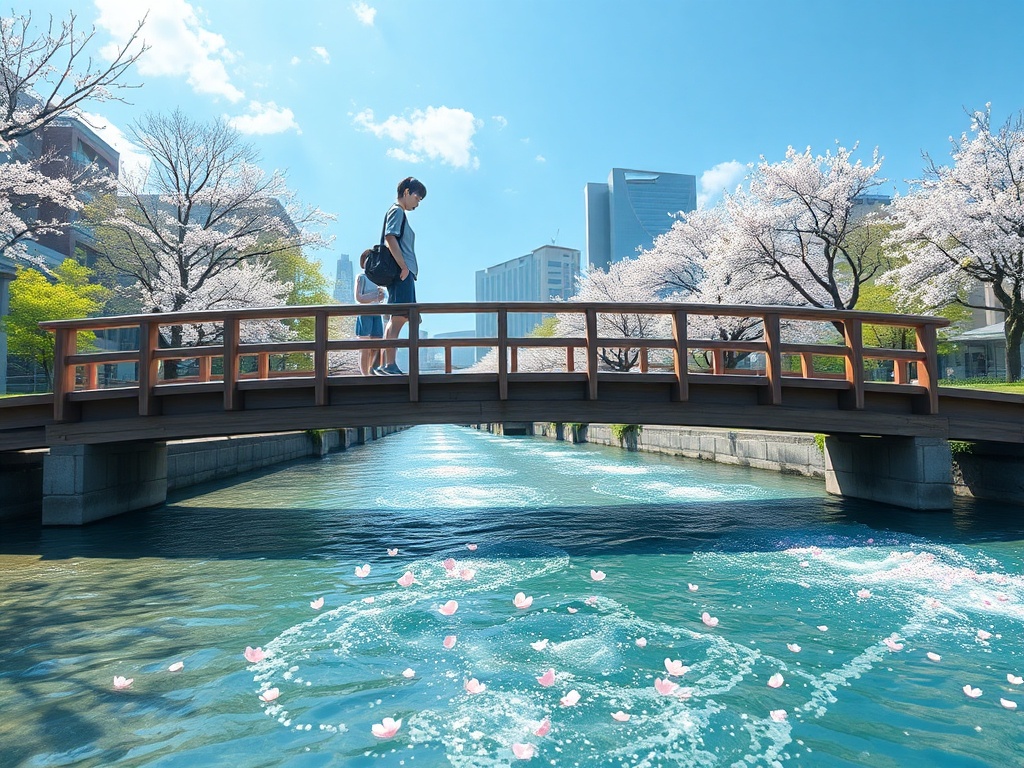
Decoding 「水に流す」: The Art of 'Washing Away' Conflict to Build Lasting Bonds
Decoding 「水に流す」(Mizu ni nagasu): The Art of 'Washing Away' the Past 🌊
Have you ever been in this situation? You have a heated argument with a Japanese colleague about a project. The tension is palpable, and the office atmosphere becomes stifling. You plan to have a serious talk the next day to "resolve" things, or worse, you worry the relationship is permanently broken.
But the next morning, that colleague greets you with a bright smile and asks, "Hard day yesterday, wasn't it? Want to grab a beer tonight?"
Welcome to the world of 「水に流す」 (Mizu ni nagasu)—one of the most vital unwritten social rules for surviving and thriving in Japan. 🇯🇵
1. What does 「水に流す」 actually mean?
Literally translated, the phrase means "to let it flow into the water." In Western cultures, when there is a conflict, we often feel the need to sit down, analyze who was right or wrong, and reach a definitive resolution.
In Japan, however, the philosophy of 「和」(Wa - Harmony) is paramount. Picking apart past mistakes or forcing someone to admit fault publicly often deepens the emotional wound. Instead, the Japanese choose to treat the unpleasant incident as if it never happened. They let it wash away with the current, cleaning the slate for a fresh start. ✨
2. Why do the Japanese prefer this over direct confrontation?
After living in Japan for many years, you realize that people here are deeply averse to direct confrontation (Conflict avoidance). Forcing someone to apologize or explain themselves can be seen as insensitive, causing them to "lose face" (顔を潰す).
The concept of 「水に流す」 is rooted in Shinto purification rituals, where water is used to wash away impurities. In modern communication, it acts as a magical "Reset button":
- Preserving Face: Neither party has to endure the humiliation of admitting defeat.
- Maintaining Atmosphere (Kuuki): The office doesn't split into factions based on old grudges.
- Energy Efficiency: Instead of spending hours on psychological analysis, people spend that time working or bonding over drinks.
3. The Scary Opposite: 「根に持つ」 (Ne ni motsu) 🚩
To understand the importance of letting things go, you must know the opposite phrase: 「根に持つ」, which means "to hold the roots in one's heart"—carrying a grudge.
If you don't know how to 「水に流す」 after a disagreement, you'll be labeled as someone who is difficult to deal with (付き合いにくい). Someone who is perceived as 「根に持つ」 will gradually be isolated from important projects because superiors and colleagues fear you might dig up old dirt at an inappropriate time.
In Japan, holding a grudge is like holding a hot coal; it doesn't just burn you, it ruins the collective harmony of the group.
4. How to practice 「水に流す」 like a local 💡
How do you execute this move naturally? Here are three real-life scenarios:
Scenario A: After a mistake at work
Instead of repeatedly apologizing (which forces the other person to relive the negative memory), focus on doing the next task exceptionally well and say:
「昨日の件は水に流して、今日からまた心機一転頑張りましょう!」 (Let’s let yesterday's matter wash away and work hard with a fresh spirit starting today!)
Scenario B: During a Nomikai (Drinking party) 🍻
This is the ultimate venue for this art. If you spoke out of turn the day before, raise your glass and say:
「昨日はちょっと熱くなりすぎちゃいましたね。酒の席の話ということで、水に流してください。」 (I got a bit too heated yesterday. Let's just leave it as 'talk over drinks' and let it wash away.)
Scenario C: When the other party initiates a reset
If they suddenly invite you to lunch or give you a small gift after a spat, that is their signal to 「水に流す」. Never be so foolish as to ask, "So, do you realize where you went wrong yesterday?" Simply smile, accept the gesture, and talk about a completely new topic. That is true emotional intelligence in Japan.
5. Important Note: Don't confuse it with negligence! ⚠️
「水に流す」 does not mean ignoring systemic errors so they repeat. You must still learn from the mistake privately and fix it through your actions. The difference is that you resolve the feelings and the relationship by letting them flow away, rather than letting them become a permanent psychological barrier between you.
Conclusion
After a decade in Japan, I've realized that true maturity here isn't about how many arguments you win, but how many times you know how to "forget" at the right moment.
Mastering 「水に流す」 will transform you from a "blunt but rigid" foreigner into a sophisticated, resilient, and positive partner in the eyes of the Japanese.
Don't let the roots of resentment grow deep. Just let the water carry them away, and you'll find your life in Japan much more peaceful! 🌊🤝
Have you ever had a moment where you had to 'let it flow into the water'? Share your story!
Thẻ liên quan:
Lan tỏa kiến thức
Chia sẻ những điều hay ho với bạn bè