
Decoding 「足並みを揃える」: The Art of Synchronization to Survive in Japan
Decoding 「足並みを揃える」: The Art of Synchronization to Survive in Japan
If you have lived in Japan long enough, you will realize a paradox: sometimes doing your work too fast or being too outstanding can make your colleagues uncomfortable. In the West, individual performance is king. But in Japan, there is a much more powerful concept: 「足並みを揃える」(Ashinami wo soroeru) - The Art of "Aligning Footsteps."
👣 What does 「足並みを揃える」 actually mean?
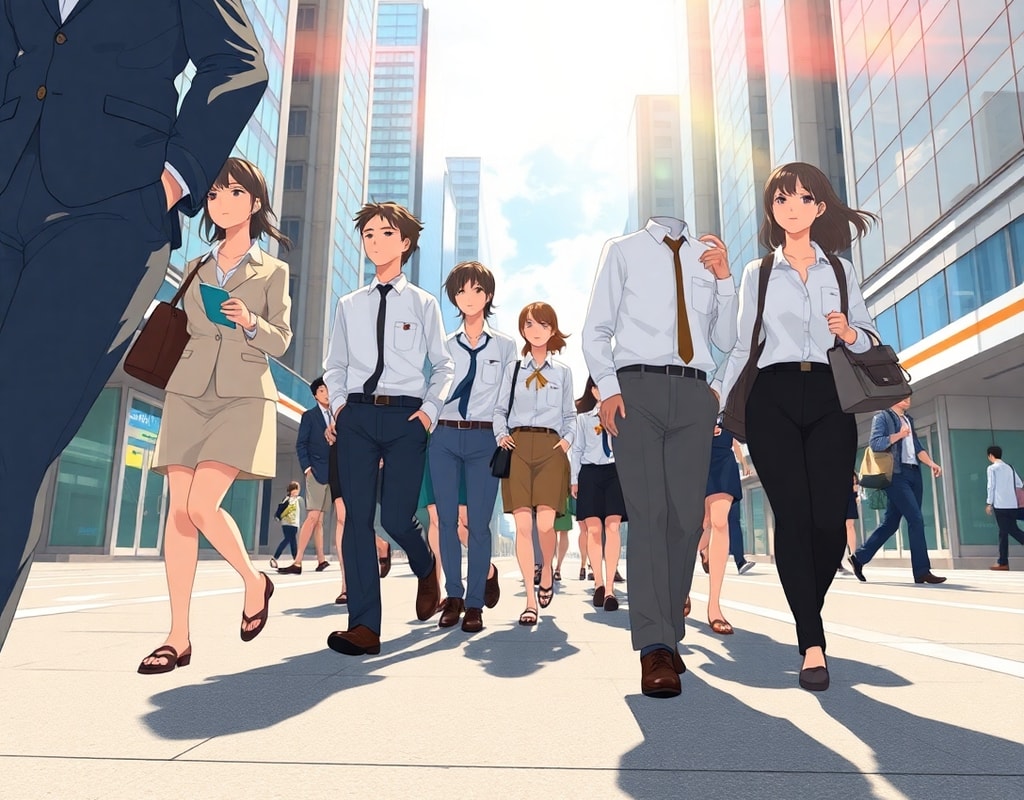
Literally, this phrase means "to march in step," much like soldiers on parade or Japanese students practicing synchronized walking during sports festivals. However, in real life and especially in the workplace, it carries a deeper layer of meaning: Absolute synchronization of mindset, progress, and action with the collective.
Japanese people believe that a ship runs well only when all engines operate at the same rhythm. If one engine runs too fast, it puts pressure on the other parts and will eventually break the entire system. This is why this phrase appears in every corner of life.
⚠️ The Trap of "Solitary Excellence"
Many foreigners new to Japan (or even those who have been here for a long time but haven't fully grasped the culture) often make the mistake of trying to run fast to prove their ability. They finish projects way ahead of deadlines, propose groundbreaking improvements without consulting anyone, or reply to emails immediately while the rest of the team is still discussing.
The result? Instead of being praised, they receive wary looks or subtle reminders like: "You seem to be in a bit of a hurry, don't you?" (ちょっと急ぎすぎじゃない?).
In Japan, if you run ahead of everyone, you are not a leader; you are an outlier. When you don't "align your footsteps" (足並みを揃える), you are unintentionally forcing others to run after you, breaking the balance (Wa - 和) that they have worked so hard to build.
💼 Practical Application in Reality
How can you "align your footsteps" without losing your individual capability? Here are 3 real-world scenarios that I have summarized from years of living in Japan:
-
In Meetings: Never make a shocking decision right at the meeting table if you haven't performed Nemawashi (informal background briefing) beforehand. "Ashinami wo soroeru" here means ensuring everyone has the same level of information and preparation before officially finalizing an issue.
-
In Work Progress: If you finish a task early, don't rush to submit it just to score points. Use that time to double-check or support your colleagues so the whole team reaches the finish line together. Submitting work too early can sometimes create a "new standard" that puts undue pressure on others, making you an unintended enemy of the majority.
-
In Social Interaction: When dining with colleagues, even ordering food requires looking around. If the whole table orders set meals (Teishoku), don't be the only one to order something that takes 30 minutes to prepare. Synchronization in the smallest things is how you affirm: "I belong here."
🌟 Why You Need to Master This Skill
When you know how to 「足並みを揃える」, you will gain absolute trust. Japanese people will see you as someone who "gets it" (Wakarite), someone who can be trusted with important responsibilities.
Synchronization does not mean becoming mediocre. It means knowing how to regulate your energy to lift the whole collective. A truly talented person in Japan is one who can run fast but chooses to slow down a bit to hold the hands of those around them and move forward together.
💡 Final Thoughts
Living in Japan is not a sprint; it is a long-term group journey. Don't let an oversized ego or haste make you fall out of rhythm. Learn to listen to the footsteps of those around you and adjust your stride to match theirs. Only then will your career and life in the Land of the Rising Sun become smoother and more sustainable than ever.
Master this subtle art, and you master the heart of Japanese society! 🇯🇵✨
Thẻ liên quan:
Lan tỏa kiến thức
Chia sẻ những điều hay ho với bạn bè