
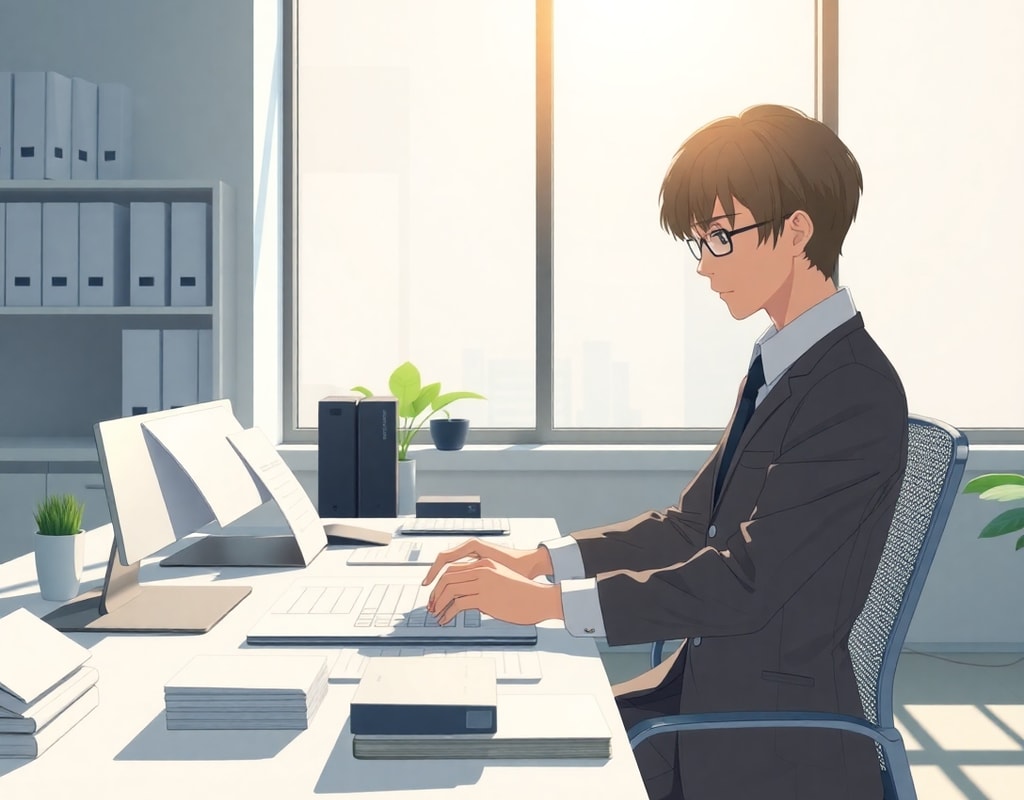
Decoding 「体裁を整える」: The Art of 'Polishing Appearances' to Navigate Japan Smoothly
Decoding 「体裁を整える」: The Art of 'Polishing Appearances' to Navigate Japan Smoothly
If you've lived in Japan long enough, you've likely experienced the frustration of having a brilliant idea dismissed just because... the document formatting was off, or a sincere apology ignored because you weren't wearing the right type of suit. Welcome to the world of 「体裁」 (Teisai) – a place where "form" isn't just a shell; it's the ultimate passport for real-world value. 🎭
1. What does 「体裁を整える」 actually mean?
Literally, this phrase means "to arrange the external appearance." But in the Japanese psyche, it holds a much deeper nuance: It is the act of ensuring that the look, format, and presentation of an object, event, or person perfectly matches social expectations and the specific context.
In Japan, the prevailing logic is: If you cannot manage the appearance (which everyone can see), how can you be competent enough to manage the core essence (which no one can see)?
2. Why is Form a 'Religion' in the Japanese Workplace? 🏢
Imagine submitting a business proposal. The content is revolutionary, capable of generating billions of yen. However, the margins are off by 1mm, the fonts are inconsistent, and the charts are gaudily colored. In many Western cultures, a boss might say, "The idea is what matters!" But in Japan, that proposal is likely to be returned with a frown.
When you 「体裁を整える」 for that document, what are you actually communicating?
- Respect for the reader: You took the time to make it as easy to follow as possible.
- Attention to detail (Kigakiku): Someone meticulous with fonts is perceived as someone meticulous with financial figures.
- Peace of mind (Anshinkan): Partners feel secure working with someone who adheres to established standards.
3. Typical 「Teisai」 Scenarios You Must Master 💡
A. Documents and Reports
Never submit a "messy" draft. Even if it's just a preliminary version, ensure the fonts are uniform and headings are clear. Japanese colleagues often use this phrase to remind each other: "Before sending this to the client, let's fix the Teisai."
B. Personal Appearance
You might be a genius programmer, but if you meet a client with unkempt hair and a wrinkled shirt, you are "breaking the Teisai" of the entire company. Here, dressing well isn't about showing off; it's about 「体裁を整える」 – maintaining the dignity of the collective you represent.
C. Problem Solving
When a mistake occurs, the first step isn't always finding the culprit. Often, it's about making the surface of the situation look stable so the partner doesn't panic. It's the art of "formal arrangement" to keep the workflow from fracturing.
4. Don't Confuse 'Showing Off' with 'Respecting Standards' ⚠️
Foreigners often criticize this as hypocrisy or a waste of time. However, if you want to reach management levels or work directly with the upper echelons in Japan, you must understand: Teisai is an operating cost.
By preparing everything impeccably, you eliminate unnecessary "noise." Your partners won't be distracted by minor errors and will instead focus entirely on the content you want to convey. Once the form is perfect, trust is established twice as fast.
5. Tips to 「体裁を整える」 Like a Native 🌟
- Always use Templates: Don't reinvent the wheel. Ask your colleagues: "What is the usual Teisai for this?" (What is the standard format?).
- The 5-Minute Rule: Before hitting send on an email or report, spend 5 minutes just checking typos, fonts, and alignment. Don't read the content; just look at the "layout."
- Observe Superiors: Watch how they dress and how they prepare their slides. That is the Teisai standard you should aim for.
Conclusion
Mastering the art of 「体裁を整える」 doesn't mean becoming a shallow person who only cares about looks. On the contrary, it is the mark of a sophisticated professional who knows how to regulate themselves to integrate and lead within Japan's rigorous environment. When the shell is solid, your inner substance has the best chance to truly shine.
Good luck becoming a master of "Teisai" in the eyes of your Japanese peers! 🇯🇵✨
Thẻ liên quan:
Lan tỏa kiến thức
Chia sẻ những điều hay ho với bạn bè